
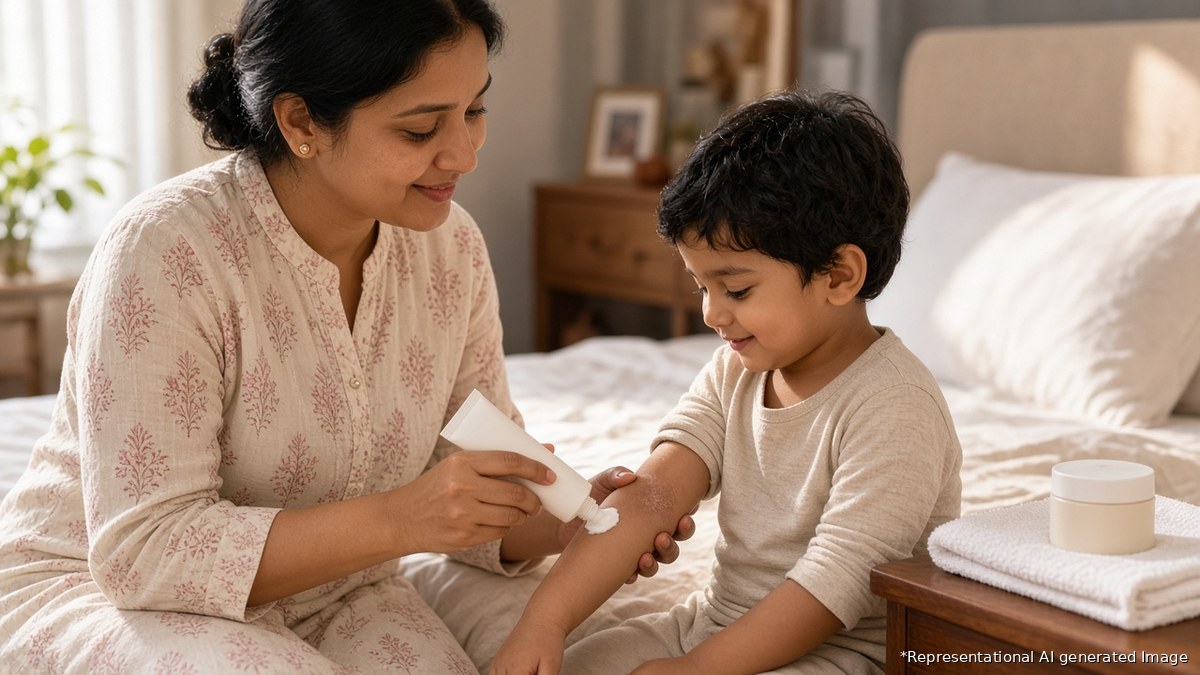
As the cool, dry weather sets in, I see the same worried faces in clinic: a little one scratching at the elbows all night, rough patches on the cheeks, and tired parents who have tried every cream on the shelf. This is often eczema, and winter is when it flares. The good news: a few steady habits make a real difference.
Quick answer: Moisturise your child’s skin generously at least twice a day, keep baths short and lukewarm, avoid soap, and use the medicated cream your doctor prescribes during flare-ups. See a doctor quickly if the skin looks infected.
What is eczema?
Eczema, also called atopic dermatitis, is a common skin condition that makes skin dry, itchy and inflamed. The American Academy of Pediatrics explains that many children with eczema have a weaker skin barrier, the outer layer that holds water in and keeps irritants out. Eczema often runs in families and frequently goes along with asthma and allergies.
What it looks like
- In babies: dry, red patches on the cheeks, forehead and scalp
- In older children: rough, itchy skin in the elbow creases, behind the knees, on the neck and wrists
- On brown Indian skin, patches may look darker, greyish or lighter rather than red
- Scratching, poor sleep and irritability, especially at night
Why winter makes it worse
Cool, dry air pulls moisture out of the skin. Long hot-water baths and woollens directly on the skin add to the itch. According to the NHS, soaps, detergents, some fabrics, heat and sudden temperature changes are common triggers.
What you can do at home
- Moisturise often. Apply a plain, fragrance-free moisturiser (an “emollient”) all over at least twice a day, and keep going even when the skin looks better.
- Bath smart. Keep baths short, about 5 to 10 minutes, in lukewarm water. Pat dry gently and apply moisturiser within a few minutes, while the skin is still slightly damp.
- Skip soap. Use a mild soap-free wash or the emollient itself instead of regular soap or bubble bath.
- Dress in soft cotton. Put a cotton layer under woollens and avoid overheating your child at night.
- Keep nails short to limit damage from scratching.
During flares your doctor may prescribe a steroid cream. Many parents fear these and use too little, too late, but the NHS eczema guidance lists topical steroids as a main treatment; used in the right strength and for the advised time, they settle flares safely. Avoid unknown over-the-counter “skin creams”, as some hide strong steroids.
Food is rarely the main cause, so don’t restrict your child’s diet on your own; my guide on starting solids explains safe food introduction. If your child also wheezes at night, see my note on air pollution and asthma.
When to see a doctor
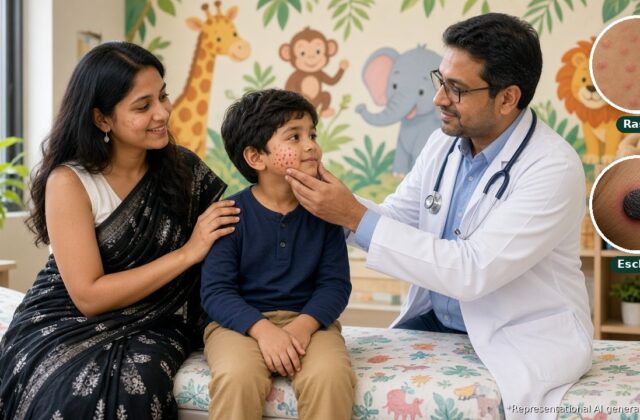
Book a visit if the itch disturbs sleep, the patches keep spreading, or home care isn’t helping. Seek care the same day if the skin:
- has yellow or honey-coloured crusts, is oozing, or has pus bumps
- turns painful, swollen or warm, or suddenly gets much worse
- comes with fever or your child seems unwell
Clusters of painful blisters or punched-out sores with fever can mean a herpes virus infection on top of eczema and need urgent care; spreading itchy blisters with fever may also be chickenpox. For a personalised skin-care plan, you’re welcome to visit the clinic.
Key takeaways
- Winter’s dry air often triggers eczema flares in children.
- Daily moisturising, short lukewarm baths and soap-free washes are the foundation.
- Crusting, oozing, pain or fever means the skin may be infected: see a doctor.
Frequently asked questions
Is eczema contagious?
No. Eczema cannot spread from one child to another. Children with eczema do get skin infections more easily, because their skin barrier is weaker, but the eczema itself is not catching.
Are steroid creams safe for my child’s eczema?
Yes, when used as your doctor advises. Mild steroid creams applied in the right strength, amount and duration are a standard, safe treatment for flare-ups. Problems usually come from using strong creams without guidance for long periods, not from correct use.
Does food cause my child’s eczema?
Usually not. Some children with eczema also have food allergies, but foods are rarely the main cause. Please don’t cut out milk, eggs or other foods without talking to your pediatrician, as this can affect growth.
Will my child outgrow eczema?
Many do. Eczema often improves as children grow, and for some it starts settling by around age 4. Some children keep dry, sensitive skin, so good daily skin care stays helpful.
Disclaimer: This article is for general information and does not replace a medical consultation. Please see your pediatrician for advice about your child.



Leave a Reply