
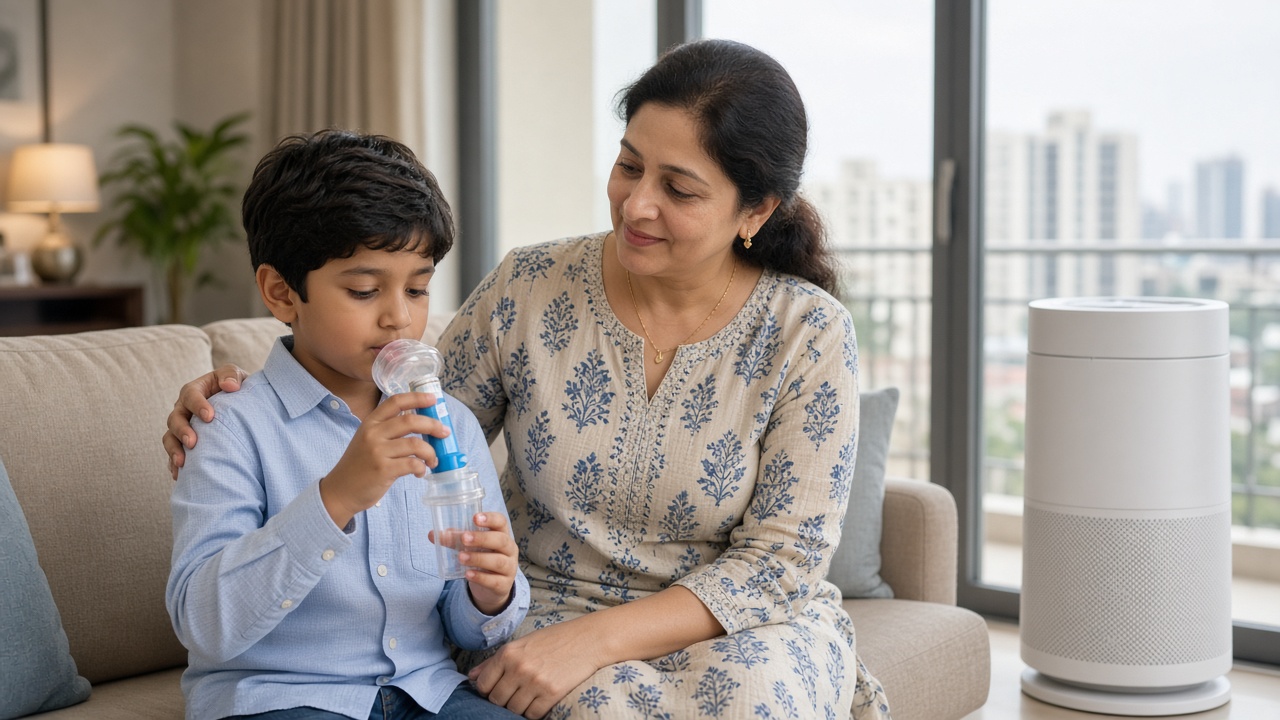
Every October, as the monsoon fades and Diwali approaches, my clinic fills with the same sound: a dry night-time cough and a soft whistle when a child breathes out. Stubble smoke, traffic, construction dust, cooler still air and then firecracker smoke all settle close to the ground, and children’s lungs feel it first.
Quick answer: Polluted air can trigger asthma attacks and cough in children. Check the daily AQI, limit outdoor exertion on poor-air days, keep any prescribed preventer inhaler going, keep the reliever handy, and seek care quickly if breathing becomes hard.
What it is
Asthma is a long-term condition in which the airways (breathing tubes) become swollen and twitchy. When irritated, they tighten and make extra mucus, causing wheezing (a whistling sound), cough and breathlessness. Tiny smoke particles called PM2.5 travel deep into the lungs and are a well-known trigger, as the WHO asthma fact sheet notes.
Why it matters for children
Children breathe faster than adults, spend more time outdoors running around, and their lungs are still growing. The WHO report Air pollution and child health links dirty air to more childhood asthma, chest infections and poorer lung growth. Even children without asthma may cough for days after a smoky festival night. If your child has had pneumonia or frequent wheezy colds, they can be more sensitive.
What to watch for
- Cough that is worse at night, early morning or after play
- Wheezing or a tight chest
- Breathing faster than usual, or tiring quickly while playing
- Itchy eyes, runny nose and sneezing on smoky days
- Needing the reliever (blue) inhaler more often than usual
Not every cough is asthma; my guide on cough in children helps you tell the difference.
What you can do
- Check the AQI daily using the CPCB SAMEER app. On “poor” or worse days, move play and sports indoors.
- Keep windows closed during peak smoke (evenings and Diwali nights). An air purifier with a HEPA filter in the child’s bedroom helps.
- Never skip the preventer. If your child is on a daily controller inhaler, continue it even when they seem well.
- Learn spacer technique. An inhaler with a spacer delivers medicine well; ask me to check your child’s technique.
- Keep children away from crackers and smoke, including incense, mosquito coils and indoor smoking. See my Diwali firecracker safety tips.
- Stay up to date on the flu vaccine, since infections plus smoke are a common double trigger.
When to seek care
Go to an emergency department immediately if your child is struggling to breathe, cannot speak full sentences, has ribs sucking in with each breath, lips look bluish, or the reliever does not help or is needed every few hours. Book a routine visit if cough lasts beyond two weeks, wheeze is new, or night cough disturbs sleep. You can book a consultation with me to review an asthma action plan before Diwali.
Key takeaways
- Post-monsoon and Diwali smoke is a strong trigger for childhood cough and asthma.
- Watch the AQI and shift activity indoors on poor-air days.
- Continue preventer inhalers; keep the reliever and spacer handy.
- Breathing difficulty, bluish lips or a reliever that isn’t working need urgent care.
Frequently asked questions
Can Diwali smoke cause asthma in a child who never had it?
Smoke and fine particles irritate every child’s airways, and some children develop cough or wheeze for the first time during smoky weeks. A first wheeze needs a doctor’s assessment; it is not always asthma.
Should my child use an inhaler with a spacer or a nebuliser?
For most children, a metered-dose inhaler with a spacer (and a mask for young children) works as well as a nebuliser when used correctly, and it is quicker and portable. Your pediatrician will advise what suits your child.
Do masks help children on high-pollution days?
A well-fitting N95-type mask can reduce exposure for older children for short periods outdoors. Cloth masks offer little protection against fine particles. Masks are not advised for babies and toddlers; for them, limiting outdoor time matters more.
What AQI level is unsafe for children to play outside?
On India’s AQI scale, ‘poor’ (201–300) and worse means children with asthma should avoid long outdoor play, and on ‘very poor’ or ‘severe’ days all children should keep outdoor exertion short.
Disclaimer: This article is for general information and does not replace a medical consultation. Please see your pediatrician for advice about your child.



Leave a Reply