
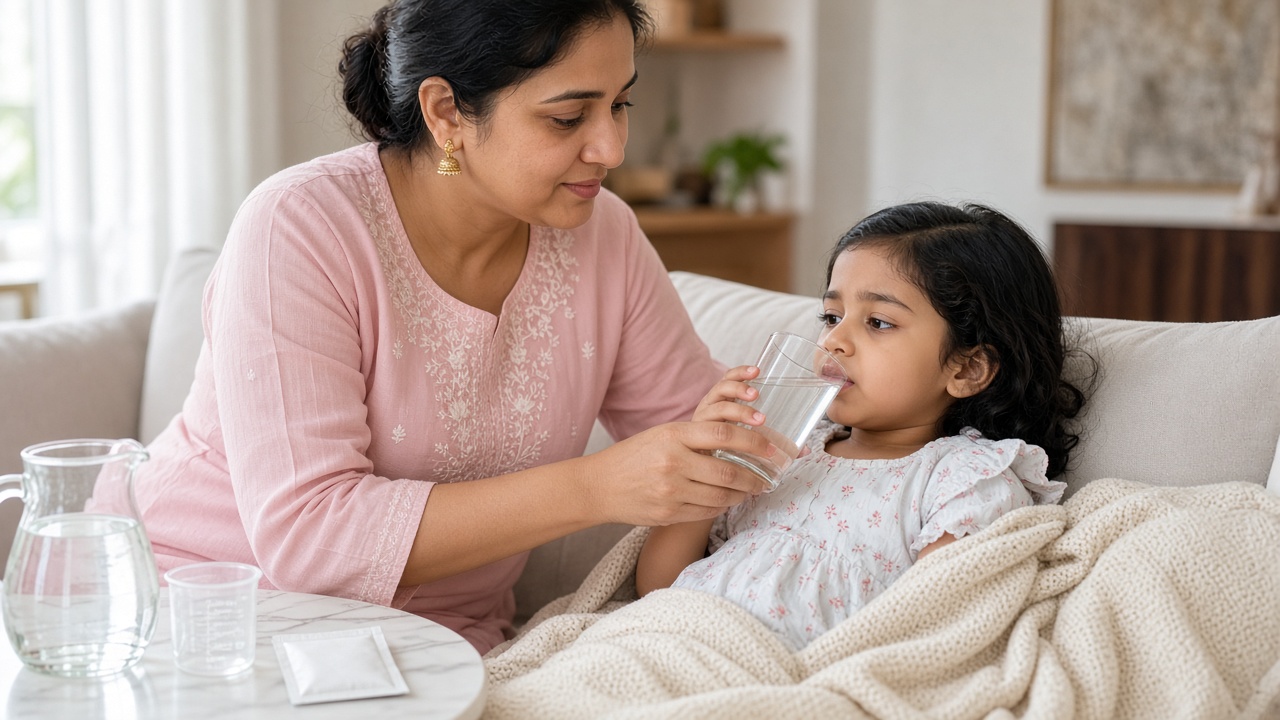
Almost every week, a parent shows me the bright “electrolyte” drink they have been giving a child with loose motions, and wonders why the diarrhoea is getting worse. The pack looks like medicine, but it is mostly sugar water. This is one of the most common mix-ups I see every October, when post-monsoon tummy bugs meet festive sweets and outside food.
Quick answer: Most diarrhoea in children settles in a few days. What protects your child is real WHO-formula ORS, zinc for 10–14 days, continued feeding, and watching closely for signs of dehydration.
What it is
Diarrhoea means three or more loose or watery stools in a day. In children it is usually caused by viruses such as rotavirus and norovirus, and sometimes by bacteria from contaminated water or food. The real danger is dehydration, which means the body losing more water and salts than it takes in.
Why it matters
The WHO diarrhoeal disease fact sheet lists diarrhoea as the third leading cause of death in children under five worldwide, yet it is largely preventable and treatable with ORS and zinc. Babies and toddlers dehydrate much faster than adults. Post-monsoon water problems also bring infections such as typhoid, so a child with fever plus loose stools needs extra attention.
What to watch for
- Fewer wet nappies, or no urine for 6–8 hours
- Dry mouth, no tears while crying, sunken eyes
- Unusual sleepiness, irritability or floppiness
- Repeated vomiting that stops your child keeping fluids down
- Blood in the stool, high fever or severe tummy pain
What you can do
- Use real ORS. Mix one sachet of WHO-formula ORS in the exact amount of clean water written on the pack. Make a fresh batch daily. The FSSAI ban on “ORS” labels for food drinks came because children were wrongly given sugary look-alikes.
- Give zinc. 10 mg daily for babies under 6 months and 20 mg for older children, for 10–14 days, as WHO and UNICEF recommend. Zinc shortens the illness and lowers the chance of another episode.
- Keep feeding. Continue breastfeeding and simple home food such as khichdi, curd rice, idli or banana.
- Skip juices, soft drinks and anti-diarrhoea medicines unless I have prescribed them.
- Prevent the next episode. Use boiled or filtered water, wash hands with soap, choose freshly cooked festive food, and make sure your baby has had the rotavirus vaccine. My rainy-season health guide has more tips.
When to seek care
Go to a hospital straight away if your child shows signs of dehydration, cannot keep ORS down, is very drowsy, has bloody stools, or is a baby under 6 months with frequent watery stools. Please also see a doctor if diarrhoea lasts more than a few days or a fever in a young baby comes with it. If you are unsure, you can schedule a visit with me and we will check your child’s hydration together.
Key takeaways
- Real WHO-formula ORS and zinc are the cornerstones of treatment.
- Sugary “electrolyte” drinks are not ORS and can make diarrhoea worse.
- Keep feeding; avoid unnecessary antibiotics and anti-diarrhoea medicines.
- Dry mouth, very little urine, drowsiness or blood in stools need prompt care.
Frequently asked questions
Are packaged electrolyte or ‘energy’ drinks the same as ORS?
No. True ORS follows the WHO formula with a precise balance of salt and glucose. Many flavoured electrolyte drinks contain much more sugar and can worsen diarrhoea. In India, FSSAI has barred food and beverage products from using the word ‘ORS’ on their labels. Buy ORS from a pharmacy and look for ‘WHO formula’ on the pack.
How much ORS should I give my child?
As a rough guide, give small, frequent sips after every loose stool: about 50–100 ml for children under 2 years and 100–200 ml for children aged 2–10, and more if they want it. Use a spoon or cup for babies, and offer it slowly if they vomit.
Should I stop milk or food during diarrhoea?
No. Continue breastfeeding and keep offering normal, light home food. Feeding helps the gut recover and prevents weight loss. Avoid fruit juices, soft drinks and very sugary or oily food.
Does my child need antibiotics for loose motions?
Most childhood diarrhoea is caused by viruses and gets better without antibiotics. Antibiotics are needed only for specific causes, such as blood in stools with fever, and only after a doctor’s assessment.
Disclaimer: This article is for general information and does not replace a medical consultation. Please see your pediatrician for advice about your child.


Leave a Reply