

The day a premature baby goes home from the NICU is one of the happiest days I see as a neonatologist, and often one of the most nervous for parents. After weeks of monitors and nurses, you are suddenly in charge. The good news: with a few simple habits, most premature babies do very well at home.
Quick answer: keep your baby warm with skin-to-skin care, feed breast milk often, protect them from infections, give vaccines on time by actual age, never miss the eye and hearing checks, and judge development by corrected age.
Why premature babies need extra care
A baby is premature, or preterm, when born before 37 weeks of pregnancy. The World Health Organization estimates that more than 1 in 10 babies worldwide are born too early, and complications of preterm birth are the leading cause of death in children under 5. Premature babies have little body fat, small stomachs and immature lungs and immunity, so they lose heat quickly, tire while feeding and catch infections more easily. World Prematurity Day on 17 November is a good moment to talk about what helps them thrive.
What you can do at home
Warmth and kangaroo care
Skin-to-skin contact on a parent’s chest, called kangaroo mother care, keeps your baby warm, steadies breathing and helps feeding. In its 2022 guidelines, WHO recommends it for as many hours a day as possible, and fathers and grandparents can share it. I explain the technique in my guide to kangaroo care in winter.
Feeding
Breast milk is the best food and lowers infection risk. Preterm babies may need feeds every 2 to 3 hours and should be woken if they sleep too long. Give the vitamins, iron or milk fortifier your NICU team prescribed, and keep weight checks as advised.
Protection from infection
- Wash hands before touching the baby, and limit visitors for the first weeks.
- Keep anyone with a cold or cough away, and keep the home smoke-free.
- Avoid crowded places during this winter virus season.
Safe sleep
Always put your baby on their back, on a firm flat surface, close to your bed. My article on safe sleep for babies covers the details.
Checks you must not miss
- Vaccines on time: premature babies get vaccines by their actual age from birth, not delayed. The NHS stresses that waiting only raises the risk of infection.
- Eye screening: India’s national ROP guidelines advise checking babies born before 34 weeks or under 2,000 grams for retinopathy of prematurity, an eye condition of the retina that can cause blindness. The first check should happen by about 4 weeks of age, and earlier for very small babies.
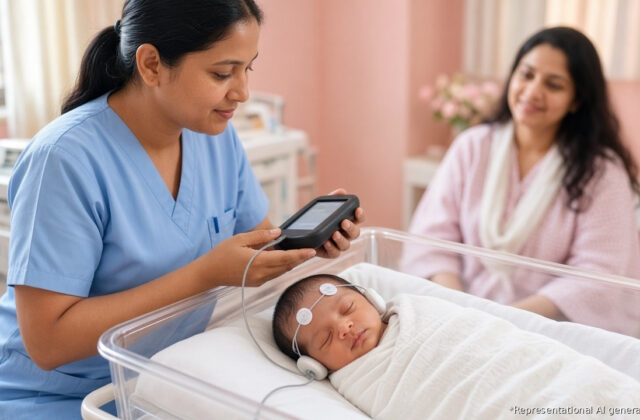
- Hearing test and regular growth and development reviews.
Corrected age: be patient with milestones
Count your baby’s milestones from the due date, not the birth date, until about 2 years. The American Academy of Pediatrics explains that most preterm children catch up by then. A baby born 2 months early may smile or sit 2 months “late,” and that is usually normal.
When to seek care urgently
See a doctor straight away if your baby has fast or difficult breathing, pauses in breathing, a bluish or very pale colour, feels cold or has a fever, feeds poorly or vomits repeatedly, is unusually sleepy or floppy, or has yellow skin spreading to the palms and soles (see my note on newborn jaundice). For routine follow-up, you can schedule a visit with me.
Key takeaways
- Skin-to-skin care and breast milk are powerful medicine.
- Vaccines go by actual age; milestones go by corrected age.
- Never skip eye and hearing checks.
- Trust your instincts: if your baby seems unwell, get help early.
Frequently asked questions
Should my premature baby’s vaccines be delayed?
No. Premature babies should get their vaccines by their actual age from the date of birth, not their corrected age. Being born early makes infections more dangerous for them, so delaying vaccines only adds risk. Very premature babies may get their first doses while still in hospital with monitoring.
What is corrected age for a premature baby?
Corrected age is your baby’s age counted from the original due date. Subtract the weeks your baby was born early from their actual age. For example, a 6-month-old born 2 months early has a corrected age of about 4 months. Use corrected age to judge milestones and growth until about 2 years.
Does every premature baby need an eye test?
In India, babies born before 34 weeks or weighing under 2,000 grams should be screened for retinopathy of prematurity, an eye condition that can cause blindness if missed. The first check should be done by about 4 weeks of age, and earlier for very small babies. Follow-up visits must not be skipped.
How long should I do kangaroo care at home?
The World Health Organization advises skin-to-skin kangaroo care for as many hours as possible each day, ideally 8 to 24 hours, for premature and low-birth-weight babies. Mothers, fathers and other family members can all take turns.
Disclaimer: This article is for general information and does not replace a medical consultation. Please see your pediatrician for advice about your baby.



Leave a Reply