
Medically reviewed by Dr. Vannala Raju, Pediatrician & Neonatologist · Last updated 26 October 2026
In my clinic, many new parents worry when their baby’s face looks a little yellow in the first few days. That yellow tint is jaundice—extra bilirubin (a pigment from normal red-cell breakdown) while the newborn liver is still learning to clear it. Most cases are mild. I still ask families to watch feeding, wet nappies, and how far the yellow spreads, because timely checks prevent rare but serious high-bilirubin injury.
- Key fact: Physiological jaundice is common—about 60% of term and 80% of preterm babies—and usually appears after 24 hours of life.
- Key fact: Jaundice in the first 24 hours, yellow palms or soles, poor feeding, or unusual sleepiness need prompt review and a bilirubin check.
- Key fact: Frequent breastfeeding helps bilirubin leave through stools; sunlight at home is not a safe treatment.
What is newborn jaundice?
Bilirubin builds up when red cells break down faster than a baby’s immature liver can remove it. Yellow usually starts on the face, then may move to the chest, tummy, arms, and legs; the eye whites can look yellow too. Indian Academy of Pediatrics guidance notes jaundice after day one that fades by about two weeks is often physiological, while early, deep, or prolonged yellow needs a bilirubin test on hour-specific charts. HealthyChildren.org stresses that mild jaundice is usually harmless, but very high levels can rarely hurt the brain—so recommended testing matters.
What should parents watch for?
Check your baby in daylight. Gently press the nose or forehead; if the skin looks yellow when you lift your finger, jaundice is likely—harder on darker skin, so ask your paediatrician when unsure. Call sooner if yellow deepens, reaches the tummy, arms, or legs, if the eyes look yellow, or if feeds drop, nappies are few, or the baby is hard to wake or unusually fussy. Premature babies, blood-group mismatch, large bruises, a sibling who needed light therapy, and early feeding struggles need closer follow-up after discharge. For related newborn topics, see newborn hearing checks and congenital CMV and fever in babies 2–3 months.
What can parents do at home?
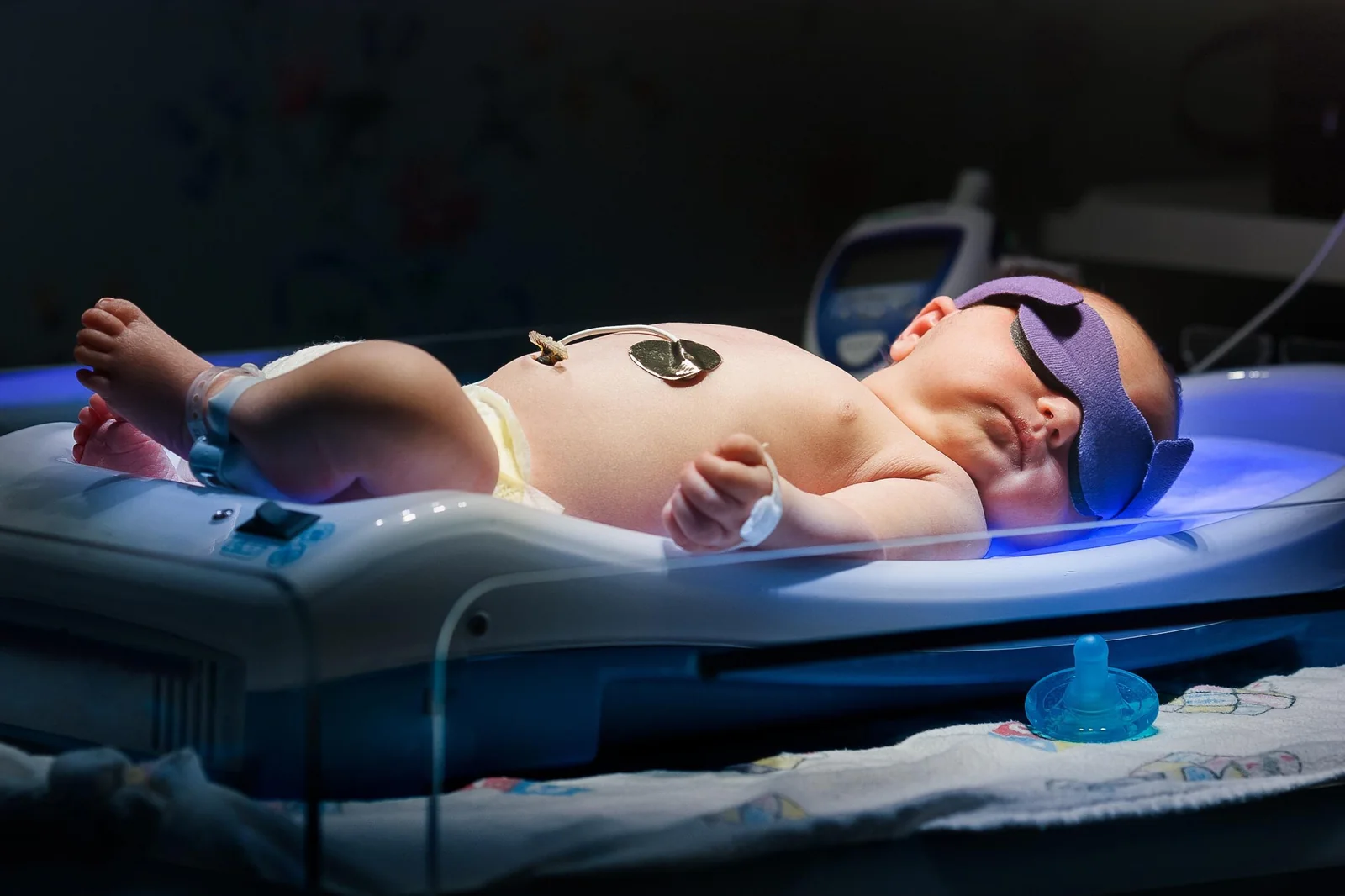
Feed often—at least 8 to 12 times in 24 hours in the first days if breastfeeding—so milk comes in and stools clear bilirubin. Seek lactation help early if latch is difficult. Keep follow-up within 48 hours after early discharge (sooner if risk factors were flagged). Do not use direct sun as treatment. If charts show a high level, phototherapy (special blue light) is the usual next step.
When should I seek care?
Seek urgent care for jaundice in the first 24 hours, deep yellow including palms and soles, poor suck, lethargy, high-pitched cry, or a baby who “does not look right.” Yellow lasting beyond about two weeks in a term baby (or three weeks if preterm) needs further tests. Your paediatrician may check bilirubin and start phototherapy when needed. For a calm review, you can book an appointment.
About the author: This article is written by Dr. Vannala Raju, pediatrician and neonatologist at Cygnet Superspeciality Clinics, Czech Colony, Hyderabad.
Once your baby is home, follow these safe sleep steps to lower SIDS risk.
Frequently asked questions
Is yellow skin on day 3 always serious?
Usually not. Mild jaundice peaking around days 3–4 is common. Still get checked if yellow is spreading, feeding is poor, or you left hospital early.
Does breastfeeding cause jaundice?
Breast milk is ideal. Low early intake can raise bilirubin; more frequent feeds help. Later “breast milk jaundice” can linger a few weeks—your doctor rules out other causes if needed.
Can I treat jaundice with sunlight at home?
No. Direct sun is not safe bilirubin treatment and can overheat a newborn. Phototherapy under clinical guidance is the proven light method when needed.
Will my baby need blood tests or phototherapy?
Many babies need only observation. Others need a bilirubin test and, if above chart thresholds, phototherapy—based on age in hours, risk factors, and levels.
This article is for general information and parent education. It is not a substitute for personal medical advice. Always discuss your newborn’s colour, feeding, and any tests or treatment with a qualified clinician.
Sources: Indian Academy of Pediatrics — Standard Treatment Guidelines: Neonatal Jaundice (STG 79); HealthyChildren.org — Jaundice in Newborns; Nemours KidsHealth — Jaundice in Newborns.




Leave a Reply