

When a baby arrives early, many parents brace for weeks of separation—looking through a nursery window, visiting in short bursts, waiting for the “all clear.” As a neonatologist, I was encouraged by a new Indian study suggesting that when hospitals can keep mother and baby together even for small, sick preterms, babies may feel less stress and grow better.
What the new research found
Researchers from Safdarjang Hospital and partner institutes in North India published a cohort study in the Indian Journal of Medical Research (IJMR, September 2026). They compared 180 preterm babies needing level-II care: 90 cared for in a mother–newborn care unit (MNCU)—where mothers stay with their babies 24×7 (“zero-separation”)—and 90 in a conventional neonatal intensive care unit (NICU), with intermittent kangaroo mother care (KMC) once babies were stabilising.
Stress was measured with salivary cortisol (a stress hormone in saliva) and a pain score after heel-prick called the Premature Infant Pain Profile (PIPP). Babies in the MNCU showed a drop in cortisol over the first week (−0.2 µg/dL on average), while NICU babies’ cortisol rose (+0.43 µg/dL). Pain scores were also lower with mother present (mean PIPP about 6.7 vs 12.7). Growth looked stronger in the MNCU group: roughly 19.7 g weight gain per day versus 8.3 g, with better length and head-growth rates. Exclusive breast-milk feeding at discharge was more common with zero-separation (about 86% vs 67%), and mothers in MNCU gave far more hours of KMC each day.
Important caveat: babies were not randomly assigned—placement depended on MNCU bed availability—so this shows a strong association, not a perfect controlled trial. The authors also used matching to balance baseline differences. Full paper: doi.org/10.25259/IJMR_417_2026.
Why zero-separation matters for parents
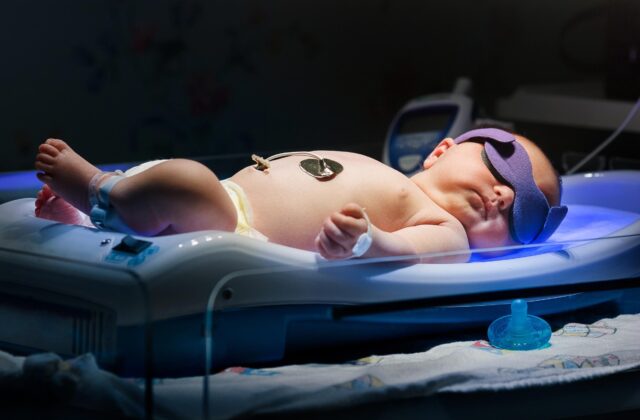
Preterm babies are often moved to a NICU for oxygen, monitoring, or infection treatment. That medical care saves lives—but separation can be stressful for both baby and parents. (I have written separately about two NICU topics parents often ask about: early caffeine to protect preterm lungs and newborn E. coli sepsis.) An MNCU keeps medical support while treating the mother as a continuous caregiver: skin-to-skin (kangaroo mother care), feeding support, and presence around the clock. The World Health Organization strongly supports kangaroo mother care for small and preterm newborns, and India’s child-health programmes promote KMC for low-birth-weight babies.
What you can watch for and ask
- Ask early whether your hospital has an MNCU, couplet-care, or family-centred NICU policy—and whether a family member can stay overnight when mother needs rest.
- Ask about KMC timing: how soon skin-to-skin can start, even for small or “sick but stable enough” babies, under staff guidance.
- Feeding goals: support for expressing milk, cup/paladai feeds, and exclusive breast milk when medically possible.
- Your own wellbeing: zero-separation helps babies, but mothers need rest, nutrition, and emotional support too.
What you can do
- If your baby may be born early or is already in a special nursery, talk with the neonatology team about rooming-in and kangaroo care options at your centre.
- Learn simple KMC positioning from nurses—upright on the chest, airway clear, secured safely—and practise under supervision.
- Keep a feeding and weight diary after discharge; follow growth clinic visits as advised.
- For personalised guidance on preterm follow-up, feeding, or vaccinations, you can book an appointment with Dr. Vannala Raju.
When to seek care
After discharge—or any time your preterm baby seems unwell—seek urgent review for poor feeding, breathing difficulty, bluish colour, unusual sleepiness, fever or low temperature, fewer wet nappies, or jaundice that worries you. Small babies can deteriorate quickly; what I tell parents of preterm babies is that a low threshold for calling your paediatrician is wise.
Frequently asked questions
What is zero-separation care in a mother–newborn care unit (MNCU)?
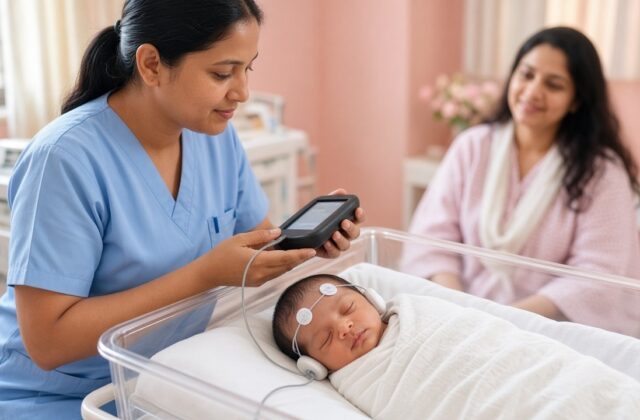
In an MNCU, the mother stays with her baby 24×7 while medical support continues. She acts as a continuous caregiver, with skin-to-skin kangaroo mother care and feeding support, instead of visiting in short bursts.
What did the Indian zero-separation study find?
In 180 preterm babies, those cared for in an MNCU showed a drop in the stress hormone cortisol, lower pain scores, faster weight gain (about 19.7 g versus 8.3 g per day) and more exclusive breast-milk feeding at discharge (about 86% versus 67%). Babies were not randomly assigned, so this shows an association rather than proof.
What is kangaroo mother care?
Kangaroo mother care means holding the baby skin-to-skin, upright on the chest with the airway clear and secured safely, along with breastfeeding support. The WHO strongly supports it for small and preterm newborns.
How can I ask for zero-separation care for my preterm baby?
Ask early whether your hospital has an MNCU, couplet care or a family-centred NICU policy, how soon skin-to-skin care can start, and whether a family member can stay overnight when the mother needs rest.
This article is for general parent information based on published research and public-health guidance. It is not a substitute for personal medical advice for your child.
Sources: IJMR — Zero-separation MNCU and preterm stress/growth (2026); IJMR article page; WHO kangaroo mother care guidance; India NHM KMC operational guidelines.

Leave a Reply