

On a cold December night a few years ago, a young couple brought their ten-day-old daughter to me because she was “too sleepy to feed.” Her feet were icy, and so was her tummy. She had no infection. She was simply cold. Twenty minutes on her mother’s bare chest under a shawl, and she was rooting for milk again. Winter mornings and nights are getting cooler now, and with National Newborn Week coming up from 15 to 21 November, this is a good time to talk about something simple that truly protects babies: keeping them warm, but not too warm.
Quick answer: A newborn’s normal temperature is 36.5 to 37.5°C. Keep the room comfortably warm, dress your baby in light layers, check warmth by touching the chest or back of the neck, and use skin-to-skin (kangaroo) care. Avoid overheating, which is also risky.
Why newborns get cold so easily
A newborn has a large head and skin surface for its size, very little fat, and cannot shiver well to make heat. The World Health Organization’s guide on thermal protection of the newborn explains that babies lose heat much faster than adults, and the smaller or more premature the baby, the greater the risk. When a baby’s temperature drops below 36.5°C, called hypothermia (a body temperature that is too low), the baby uses up energy and sugar just to stay warm. Feeding becomes poor, weight gain slows and the risk of infection rises.
Signs your baby may be cold or too hot
- Too cold: cool chest or tummy (not just cold hands and feet), pale or blotchy skin, unusual sleepiness, weak sucking or poor feeding.
- Too hot: hot or sweaty chest, flushed face, damp hair, restlessness, rapid breathing.
The NHS advises checking warmth by feeling the chest or the back of the neck, because cool hands and feet are normal in young babies.
What you can do at home
Use kangaroo care
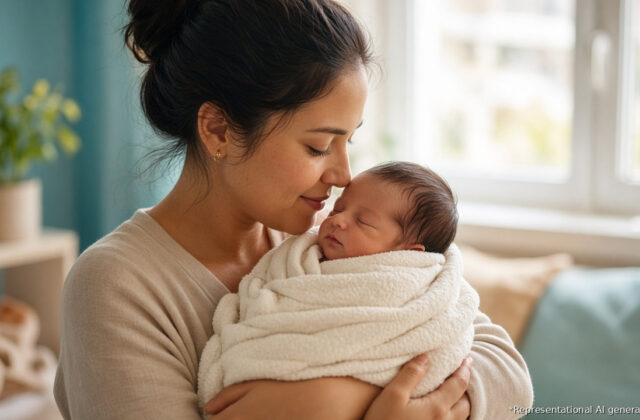
Kangaroo mother care means holding your baby in just a nappy and cap, upright against your bare chest, with your clothes or a shawl wrapped over you both. WHO now strongly recommends starting it as soon as possible for babies born early or small, and it helps every baby. Fathers, grandparents and other family members can give it too.
Dress and settle your baby wisely
- Dress in light, soft layers you can add or remove, rather than one very thick outfit.
- A cap and socks help outdoors or after a bath, but remove the cap and extra layers once you’re indoors and your baby is going to sleep.
- Keep baths short, in a warm, draught-free room, and dry and dress your baby quickly, especially the head.
- For sleep, use a light blanket tucked in at chest level or a baby sleeping bag. The NHS suggests a room of about 16 to 20°C. My safe sleep guide has more.
- Never put a baby next to a heater, fire or in direct sun, and don’t use hot water bottles or electric blankets.
- Feed often. Breast milk gives your baby the energy to stay warm.
When to seek care
Please see your pediatrician the same day if your baby feels cold even after warming, is feeding poorly, is unusually sleepy or the yellow colour of jaundice is spreading. A temperature below 35.5°C is a danger sign. A temperature of 38°C or more in a baby under three months also needs prompt review, as I explain in my guide on fever in young babies. Go to the emergency department at once for breathing difficulty, bluish lips, or a baby who is limp or hard to wake. If you’d like your newborn checked before the cold season sets in, you can book a visit with me.
Key takeaways
- Normal newborn temperature is 36.5 to 37.5°C.
- Check the chest or neck, not the hands and feet.
- Kangaroo care is one of the best ways to keep a baby warm.
- Warm, not hot: overheating is also harmful.
Frequently asked questions
What is a normal temperature for a newborn baby?
A newborn’s normal body temperature is about 36.5 to 37.5°C. Below 36.5°C the baby is getting cold, and below 35.5°C is a danger sign that needs a doctor straight away. A temperature of 38°C or more in a baby under three months also needs a doctor the same day.
How do I know if my newborn is too cold or too hot?
Feel your baby’s chest, tummy or the back of the neck rather than the hands and feet, which often feel cool even when the baby is fine. A cool chest, pale or blotchy skin and sleepiness with poor feeding suggest the baby is cold; a hot, sweaty chest or flushed face means too many layers.
What is kangaroo mother care?
Kangaroo mother care means holding your baby, wearing only a nappy and a cap, upright against your bare chest and covering both of you with your clothes or a shawl. Your body keeps the baby warm, and it also helps breastfeeding and bonding. The World Health Organization strongly recommends it for babies born early or small, and fathers and family members can do it too.
Is it safe to use a room heater for a newborn?
A heater can warm the room, but never place the baby next to it, and don’t use hot water bottles or electric blankets in the baby’s bed. Keep the room comfortably warm, not hot, and keep heaters well away from bedding and curtains.
Disclaimer: This article is for general information and does not replace a medical consultation. Please see your pediatrician for advice about your baby.



Leave a Reply