
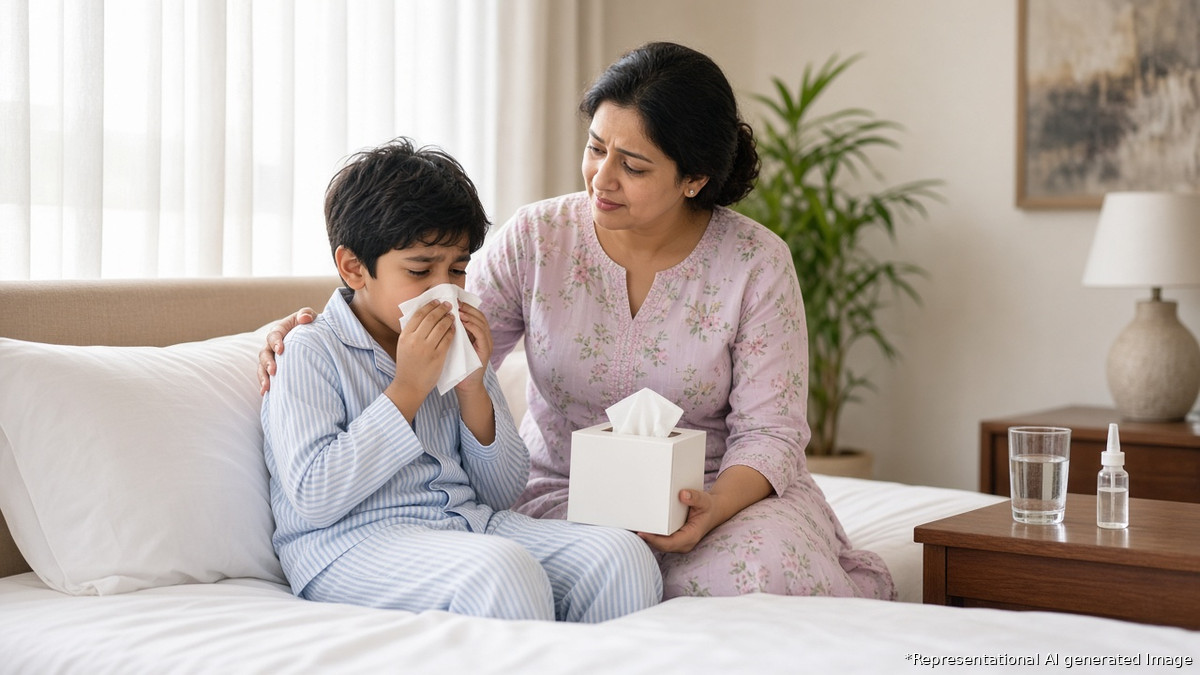
Every morning it is the same story: your child wakes up and sneezes five, six, ten times in a row. The nose runs like a tap and the eyes itch. Yet there is no fever, and the “cold” never seems to end. In my clinic, many of these children do not have a cold at all. They have allergic rhinitis.
Quick answer: allergic rhinitis is a nasal allergy. If your child has repeated sneezing, an itchy nose and a clear runny nose without fever, especially every morning or around dust, it is likely an allergy rather than an infection. It is very treatable.
What is allergic rhinitis?
Rhinitis means swelling of the lining of the nose. In allergic rhinitis, the immune system overreacts to harmless particles called allergens, such as house dust mites, pollen, mould or pet dander, and releases chemicals like histamine. As the NHS explains, symptoms usually start within minutes of contact. Children are more likely to have it if a parent has allergies, eczema or asthma.
It is common in Indian children. Data from the international ISAAC study, published in the Clinical Respiratory Journal, found allergic rhinitis in about 11% of Indian children aged 6 to 7 years and 24% of those aged 13 to 14.
Cold or allergy? How to tell
- A cold builds up over 2 to 3 days, may bring fever and body aches, and usually settles in 1 to 2 weeks, according to the NHS.
- An allergy causes sneezing fits, itching of the nose, eyes or palate, and a clear watery discharge. There is no fever, and it keeps returning around the same triggers.
Signs parents often miss
Mouth breathing and snoring at night, constant sniffing, rubbing the nose upwards with the palm, a dry cough, and a tired child who struggles to concentrate in class.
Why it matters
Untreated nasal allergy disturbs sleep, schoolwork and mood. The nose and lungs are one connected airway: a review in the World Allergy Organization Journal notes that allergic rhinitis and asthma coexist in 70 to 80% of Indian patients. Winter smog adds fuel, as I explained in my guide on air pollution and asthma in kids.
What you can do at home
- Tackle dust mites. Wash bedsheets and pillow covers weekly in hot water (60°C or above, as the NHS advises), dust with a damp cloth, and keep soft toys off the bed.
- Keep the home dry. Fix damp patches and mould, and keep rooms well ventilated.
- Pets out of the bedroom. Wash pets and their bedding regularly.
- No smoking near children. The Indian ISAAC data linked maternal smoking strongly with allergic rhinitis.
- Use saline. Salt-water nasal drops or sprays gently clear the nose and are safe at any age.
Avoid over-the-counter decongestant drops or syrups unless your doctor advises them; the NHS says decongestants should not be used in children under 6. My note on cough syrups for kids explains why many cold medicines do more harm than good.
When to see a doctor
See a pediatrician if symptoms disturb sleep or school, last for weeks, or come with cough, wheeze or breathlessness. Also check if your child has dry, itchy skin, since eczema often travels with nasal allergy. Doctors may prescribe a non-drowsy antihistamine or a steroid nasal spray, and some children need allergy testing, such as a skin prick test, as KidsHealth describes. If these symptoms sound familiar, an unhurried consultation can help find your child’s triggers.
Key takeaways
- Repeated sneezing, itching and a clear runny nose without fever point to allergy, not a cold.
- House dust mites are a top trigger; hot-washed bedding and damp dusting help.
- Saline is safe; avoid decongestants in children under 6.
- Nasal allergy and asthma often go together, so report any cough or wheeze.
Frequently asked questions
How do I know if my child has a cold or an allergy?
A cold builds up over 2 to 3 days, may bring fever and body aches, and usually settles within 1 to 2 weeks. Allergic rhinitis brings sneezing fits, an itchy nose or eyes and a clear runny nose that keep coming back whenever your child meets a trigger such as dust, and there is no fever.
What triggers allergic rhinitis in children in India?
Common triggers are house dust mites in bedding, mattresses and soft toys, pollen, mould from damp walls, and pet dander. Tobacco smoke and air pollution make symptoms worse. A large Indian study linked maternal smoking with a higher risk of allergic rhinitis in children.
Can allergic rhinitis in children be cured?
There is no permanent cure, but it can be controlled well. Reducing exposure to triggers, saline nose rinses and doctor-advised medicines such as non-drowsy antihistamines or steroid nasal sprays help most children sleep, study and play normally. Some children need allergy testing to pinpoint triggers.
Is allergic rhinitis linked to asthma?
Yes. The nose and lungs share the same airway, and allergic rhinitis and asthma often occur together. A review of allergic disorders in India found they coexist in 70 to 80 percent of patients, so a child with nasal allergy plus cough or wheeze should be checked for asthma.
Disclaimer: This article is for general information and does not replace a medical consultation. Please see your pediatrician for advice about your child.




Leave a Reply