
“Doctor, he woke up with his eyes stuck shut.” I hear this almost every morning in October. After the monsoon, red, watery and sticky eyes spread quickly through classrooms and play areas, and one child often brings it home to the whole family. The good news is that most pink eye in children is mild and gets better on its own.
Quick answer: Most pink eye in kids is viral and clears in about a week with gentle cleaning and good handwashing. Antibiotic drops help only bacterial pink eye, and a few warning signs need a doctor the same day.
What it is
Pink eye, or conjunctivitis, is swelling of the thin, clear layer that covers the white of the eye and the inside of the eyelids. The CDC notes it is one of the most common and treatable eye conditions, usually caused by viruses, bacteria or allergies.
- Viral: pink, watery eyes, often with a cold. The most common type in school children.
- Bacterial: thick yellow or green discharge, eyelids crusted shut in the morning.
- Allergic: itchy, watery eyes in both eyes, often with sneezing. Dust and smoke in the festive season can trigger it, as I explained in my air pollution guide.
Why it matters
Viral and bacterial pink eye are very contagious. Germs pass from eye discharge to hands, towels, pillows and toys, and then into another child’s eyes. It is rarely serious in older children, but in newborns it can be, so a baby with red or sticky eyes in the first weeks of life should be seen by a doctor straight away.
What to watch for
- Pink or red whites of the eyes, watering or swollen lids
- Itching, burning or a gritty “something in the eye” feeling
- Yellow or green discharge, or lashes stuck together after sleep
What you can do
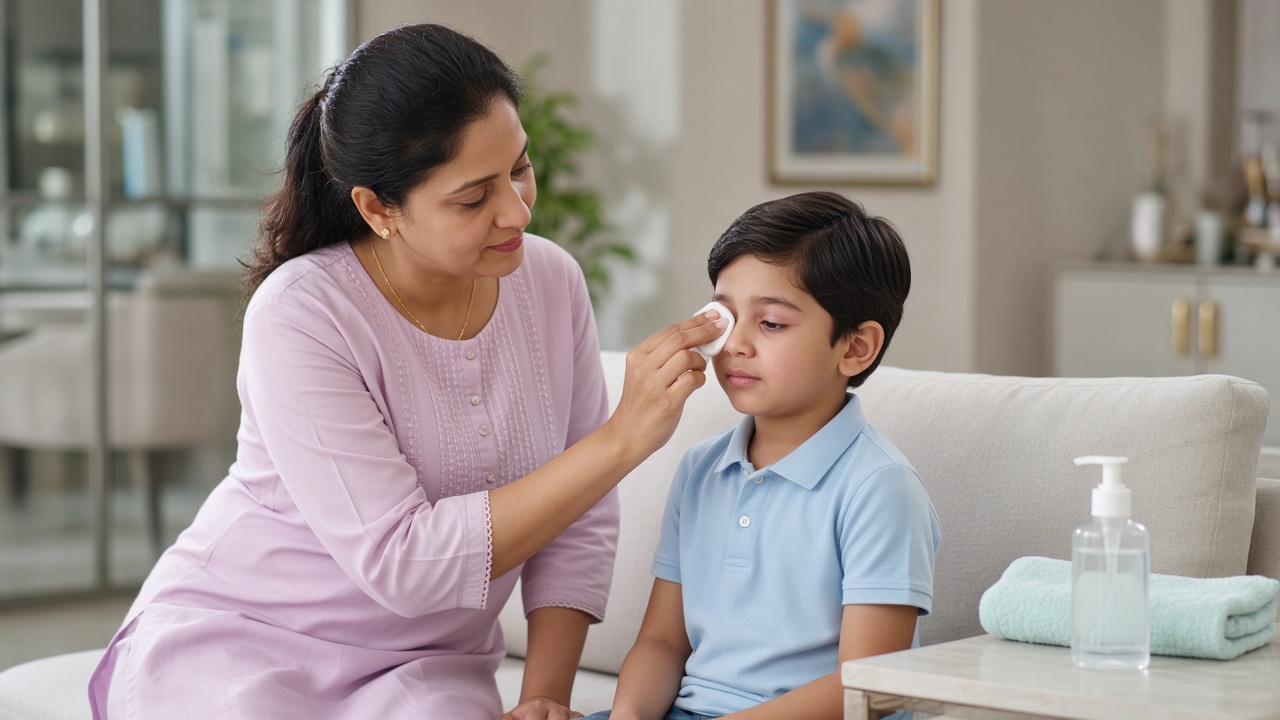
- Clean gently. Wipe from the inner corner outward with cotton dipped in boiled and cooled water, using a fresh piece for each eye.
- Wash hands with soap before and after touching your child’s eyes, and teach your child not to rub them.
- Keep things separate. Give your child their own towel, napkin and pillow cover, and wash them daily.
- Use only prescribed drops. Avoid steroid drops, leftover medicines, rose water or breast milk in the eye.
- Skip school if unwell. According to HealthyChildren.org, a child with fever should rest at home, and school rules often decide the rest.
The American Academy of Pediatrics’ pinkeye guidance for parents compares it to the common cold: easy to pass on, but most children improve in 5 to 6 days without antibiotics.
When to seek care
See a doctor the same day if your baby is under one month old, or if your child has eye pain, blurred vision, sensitivity to bright light, very swollen or red eyelids, fever, or an eye injury, or if things are not improving after a few days. These can point to a deeper infection that needs proper treatment. If you are unsure, you can book a visit with me and I will take a look.
Key takeaways
- Most pink eye in children is viral and settles in about a week.
- Antibiotic drops are only for bacterial pink eye, as decided by your doctor.
- Handwashing and separate towels stop it spreading at home.
- Newborns, eye pain, vision changes or swollen lids need prompt care.
Frequently asked questions
Does every child with pink eye need antibiotic drops?
No. Most pink eye in children is caused by viruses, often along with a cold, and settles in about 5 to 7 days on its own. Antibiotic drops help only when the infection is bacterial, usually with thick yellow or green discharge, and your pediatrician will decide that.
Can pink eye spread by looking at someone’s eyes?
No. It spreads through contact with eye discharge, usually from hands, towels, pillows or shared surfaces, and then touching the eyes. Handwashing is the best protection.
When can my child go back to school?
If your child has no fever and feels well, they can usually return with your doctor’s approval once symptoms are settling. Many schools also allow return 24 hours after starting antibiotic drops for bacterial pink eye, so check your school’s policy.
Should I use breast milk, rose water or leftover eye drops?
Please don’t. Home remedies and old or someone else’s eye drops can irritate the eye or carry germs. Use only drops your doctor prescribes, and clean the eye with plain boiled and cooled water.
Disclaimer: This article is for general information and does not replace a medical consultation. Please see your pediatrician for advice about your child.



Leave a Reply