
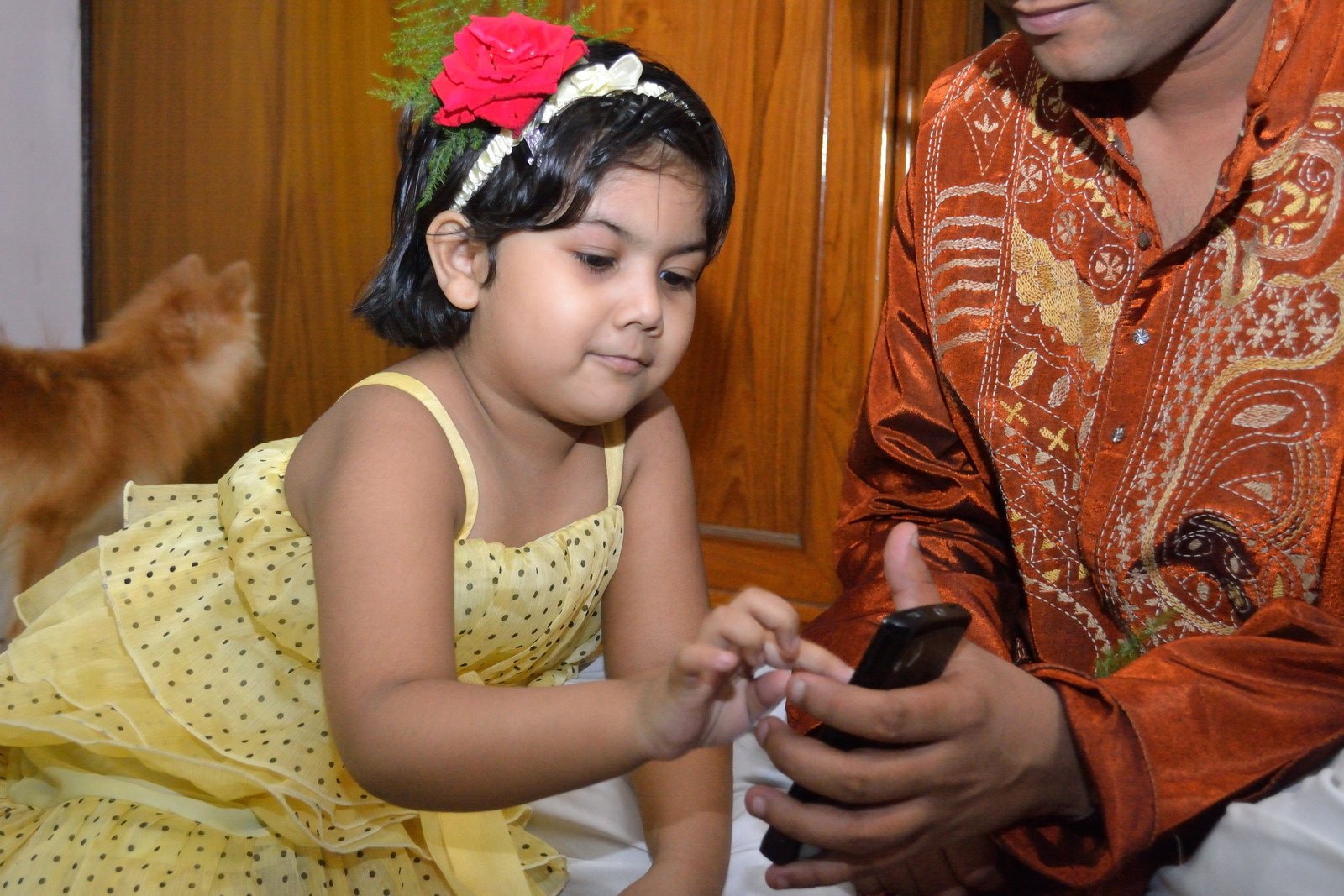
With festival holidays coming up, I see the same scene in many homes: relatives visiting, the TV on all day, and a phone handed to the little one to keep them quiet. Parents often ask me, “How much screen time is okay?” Here is the age-by-age answer I give.
Quick answer: For children under 2, I advise no screens apart from occasional video calls with family. From 2 to 5 years, keep it to one hour a day at most, in short sessions with an adult. From 5 to 10, less than two hours, including screen homework. At every age, no screens at meals or before bed.
- Key fact: Under 2 years: no screens; a video call with grandparents is the exception.
- Key fact: 2–5 years: a maximum of 1 hour a day, each session no longer than 20–30 minutes, always supervised.
- Key fact: 5–10 years: less than 2 hours a day, and that includes online homework.
- Key fact: Screens should never be used to feed, calm, or distract a child, and should go off one hour before bedtime.
What counts as screen time?
Screen time is the total time a child spends in front of any screen: phone, TV, tablet, laptop, or video game. A TV playing in the background counts too, because it pulls attention away from play and conversation. The Indian Academy of Pediatrics guideline notes that Indian children are first exposed to screens at a median age of just 10 months, and most have screen exposure by 18 months.
Why does too much screen time matter?
Young children learn language and social skills through back-and-forth talk with people, not from a screen. Excess screen time has been linked to delayed speech, poor attention, obesity, eye strain, and poor sleep. The bright light from devices suppresses melatonin, the body’s natural sleep hormone. The World Health Organization puts it simply: young children need to sit less and play more, with reading, storytelling, singing, and puzzles with a caregiver.
What warning signs should I watch for?
Screen time is too much when it pushes out sleep, play, meals, study, or family time. Watch for a toddler who talks less than expected, big tantrums when the phone is taken away, late bedtimes, falling marks, or losing interest in friends and outdoor play. Constant craving for devices, or anger when asked to stop, can signal problematic use.
What can I do at home?
- Watch together. For under-5s, sit with your child, talk about what you see, and choose slow, educational, non-violent shows.
- Make screen-free zones. Bedrooms, the dining table, and the car. Feed your child without cartoons (see my guide to starting solids).
- Use simple controls. One screen at a time, autoplay off, and a timer so the end does not come as a surprise.
- Swap, don’t just ban. Children aged 2–5 need at least 3 hours of active play a day; school-age children need at least an hour of running-about play. Active play also helps keep constipation away.
- Be the role model. Children copy what we do. Put your own phone away during family time.
Holidays are a good time to agree on simple family screen rules together.
When should I talk to a doctor?
Please see your pediatrician if your toddler’s speech seems behind, if sleep or behaviour problems persist, or if screen use is affecting school, mood, or friendships even after you have set limits. If your child is bullied online, reassure them, save the messages, block the sender, and report it at cybercrime.gov.in. If you would like a development review, you can book a visit.
Key takeaways
- No screens under 2; up to 1 hour for ages 2–5; under 2 hours for ages 5–10.
- Watch together, keep meals and bedtime screen-free, and swap screens for play and books.
Frequently asked questions
Are video calls with grandparents okay for my baby?
Yes. Brief, occasional video calls with close family who live far away are an accepted exception for children under 2.
Does online homework count as screen time?
Yes. For children aged 5–10, the under-2-hours limit includes screen time for school and extra-curricular work.
Can I show cartoons so my child eats?
Please avoid it. Screens should not be used to feed or calm a child. Mealtimes are for talking and for learning hunger and fullness cues.
How do I cut back without daily fights?
Agree on the rules in advance, give a five-minute warning, use a timer, and have a fun offline activity ready. Stay consistent.
This article is for general information and parent education, not personal medical advice. Please discuss your child’s development, sleep, and behaviour concerns with a qualified clinician.
Sources: Indian Academy of Pediatrics: Guidelines on Screen Time and Digital Wellness in Infants, Children and Adolescents (Indian Pediatrics, 2022); Indian Academy of Pediatrics: Screen Time Guidelines for Parents; WHO: Guidelines on physical activity, sedentary behaviour and sleep for children under 5 (2019); HealthyChildren.org: How to Make a Family Media Plan.

Leave a Reply