
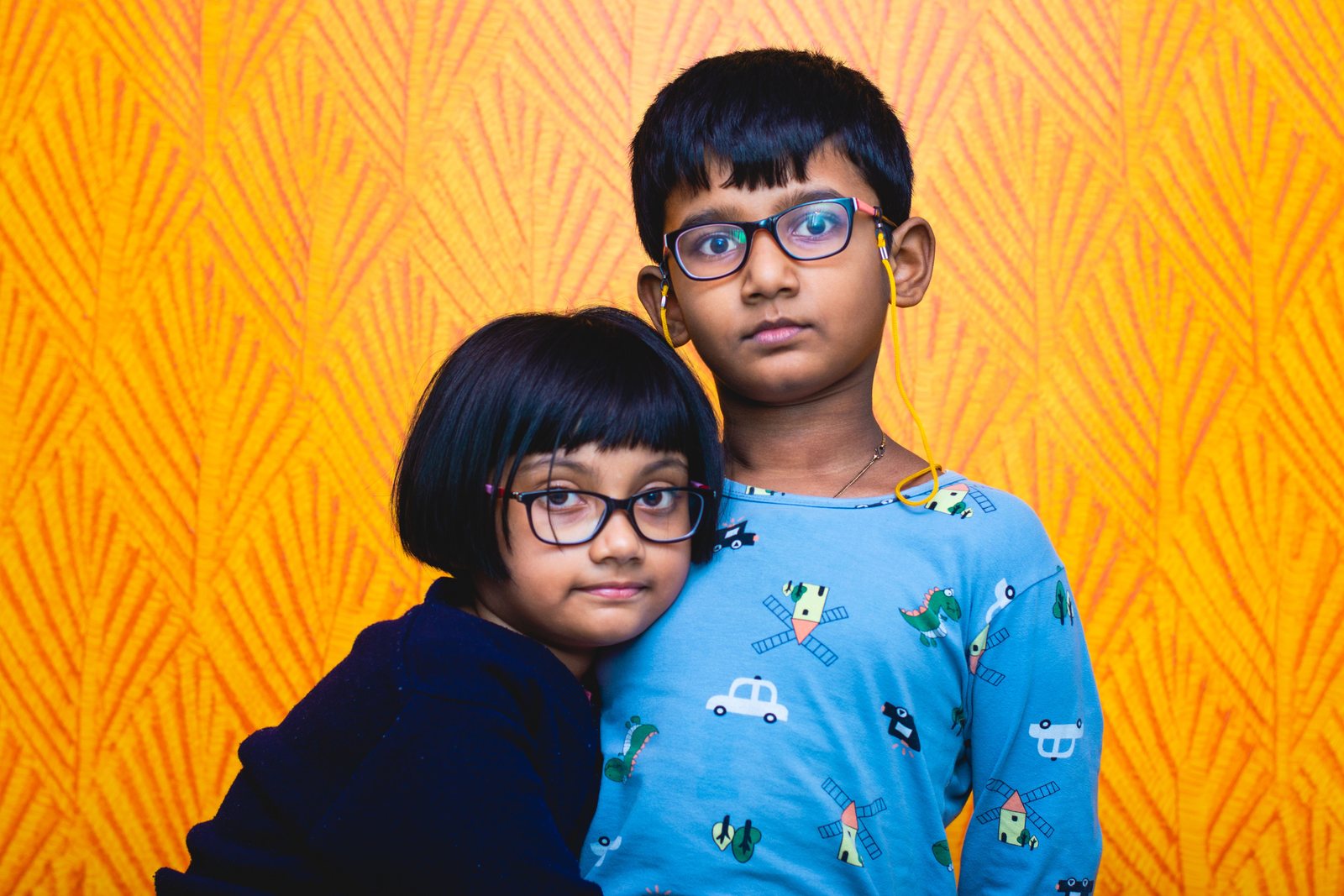
Today is World Sight Day, so let me ask a simple question: can your child see the classroom board clearly? Many children with weak distance vision never complain, because they think blurry is normal. In my clinic, parents are often surprised when a routine check shows their child needs glasses.
Quick answer: Myopia, or short-sightedness, means a child sees near things clearly but distant things look blurry. It is becoming more common in Indian children. Watch for squinting, eye rubbing, headaches, or sitting very close to screens. At least two hours of outdoor play a day, regular screen breaks and a yearly eye check help protect your child’s eyes.
- Key fact: Myopia happens when the eyeball grows too long, so light focuses in front of the retina (the light-sensing layer at the back of the eye).
- Key fact: Children are more likely to become short-sighted if one or both parents wear glasses for distance.
- Key fact: Indian eye specialists now advise at least two hours outdoors every day, an annual eye examination, and the 20-20-20 rule.
- Key fact: Myopia cannot be reversed, but glasses correct the blur and an eye specialist can use treatments to slow it down.
What is myopia?
Myopia (also called near-sightedness) is a refractive error, which means the eye does not bend light onto the right spot. Close-up things like a book look sharp, while the board, the TV across the room or road signs look fuzzy. It often begins between ages 6 and 14, and, as pediatric eye experts explain, it tends to worsen through adolescence and settle in the early twenties.
Why does it matter?
According to the World Health Organization, uncorrected refractive error remains a leading cause of vision impairment in children, and school-age children who cannot see well may do less well in school. An Indian national consensus of pediatric eye specialists notes that myopia in children aged 11–15 has nearly doubled over the past decade, linked to less outdoor time, more near work and long hours on digital devices. Very high myopia later in life raises the risk of serious eye problems such as retinal detachment and glaucoma, so catching it early matters.
What signs should I watch for?
- Squinting or half-closing the eyes to see far away
- Saying the board or faraway things look blurry
- Sitting very close to the TV, or holding a book or phone close to the face
- Frequent eye rubbing, watering or headaches after school or study
What can I do at home?
- Send them outside. Aim for at least two hours of outdoor play daily, all at once or in parts. Daylight and looking at faraway things both help. In hot months, choose early mornings and evenings (see my heat stroke guide).
- Follow the 20-20-20 rule. Every 20 minutes of reading or screen use, look at something 20 feet away for 20 seconds.
- Keep screens in check. Limit recreational screen time using my age-by-age screen time guide.
- Set up good study habits. Use bright, natural light where possible, sit upright, and keep books and screens at about arm’s length.
- Make glasses easy. If glasses are prescribed, choose a comfortable, sturdy frame and help your child wear them as advised.
When should I get my child’s eyes checked?
The 2026 All India Ophthalmological Society guidelines recommend a yearly eye examination and school vision screening. Please see an eye specialist sooner if you notice any of the signs above, if your child fails a school screening, or if the glasses power keeps rising quickly. Treatments to slow myopia, such as low-dose atropine eye drops or special spectacle and contact lenses, should only be started and monitored by an eye specialist. If you are unsure where to begin, you can book a visit here.
Key takeaways
- Blurry distance vision in a school-age child is often myopia, and children may not tell you about it.
- Two hours outdoors a day, the 20-20-20 rule and sensible screen limits are the best everyday protection.
- Get a yearly eye check, and act early if you see squinting, eye rubbing or headaches.
Frequently asked questions
Will wearing glasses make my child’s eyes weaker?
No. Eye specialists confirm that glasses do not cause myopia to worsen; they correct the blur so your child can see clearly. The power may still change as the eyes grow, which is the natural course of myopia, not a result of wearing glasses.
Can myopia in children be cured?
Myopia cannot be reversed, but it can be corrected with glasses, and an eye specialist can use treatments such as low-dose atropine drops or special lenses to slow it down.
How much outdoor time does my child need to protect their eyes?
Indian eye specialists recommend at least two hours outdoors every day. It can be split into shorter sessions, such as play before school and in the evening.
How often should children have an eye test?
A yearly eye examination is advised for school-age children, and sooner if you notice squinting, eye rubbing, headaches or trouble seeing the board.
This article is for general information and parent education, not personal medical advice. Please discuss any concerns about your child’s eyes or vision with a qualified pediatrician or eye specialist.
Sources: WHO fact sheet: Blindness and vision impairment; Saxena R, et al. Prevention and management of childhood progressive myopia: National consensus guidelines. Indian Journal of Ophthalmology, 2023; All India Ophthalmological Society revised childhood myopia guidelines, 2026 (The New Indian Express report); HealthyChildren.org (American Academy of Pediatrics): Myopia (Nearsightedness) in Children & Teens; American Academy of Ophthalmology: Can Wearing Glasses Worsen Vision?; IAPB: World Sight Day 2026.

Leave a Reply