
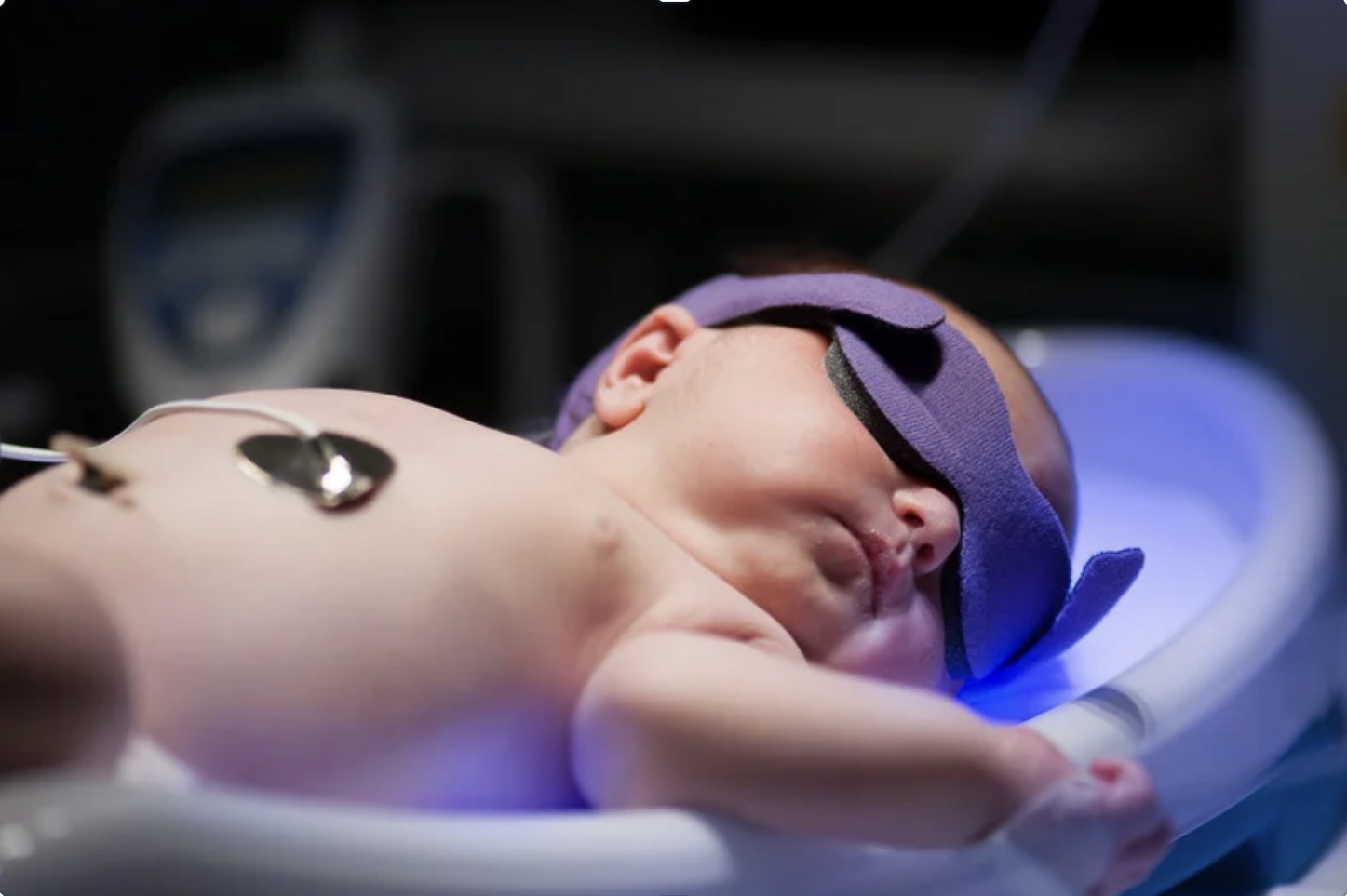
Jaundice — a yellowing of the skin and eyes caused by elevated bilirubin levels — affects up to 60% of full-term newborns and 80% of premature babies in the first week of life. While most cases resolve on their own, untreated severe jaundice (hyperbilirubinemia) can lead to serious complications, including brain damage (kernicterus).
Dr. Vannala Raju, with extensive experience in neonatal care in Hyderabad, provides comprehensive bilirubin assessment and phototherapy services to safely manage newborn jaundice from day one.
Types of Neonatal Jaundice
- Physiological Jaundice: Normal, transient jaundice appearing on day 2–3 of life, peaking at day 4–5, and resolving by day 10–14. No treatment usually required.
- Breast Milk Jaundice: Persists beyond 2 weeks due to substances in breast milk; rarely requires intervention and should not stop breastfeeding.
- Pathological Jaundice: Appears within the first 24 hours or rises rapidly — may indicate blood group incompatibility (ABO/Rh), G6PD deficiency, sepsis, or hypothyroidism.
- Prolonged Jaundice: Persisting beyond 3 weeks requires investigation to rule out cholestatic causes such as biliary atresia.
How We Diagnose and Monitor Jaundice
- Transcutaneous Bilirubinometry (TcB): A non-invasive skin test for rapid, painless bilirubin screening.
- Serum Bilirubin (Total & Direct): Confirmatory blood test for accurate bilirubin level measurement.
- Hour-specific Nomograms: Bilirubin levels are plotted against the baby’s age in hours to predict risk and guide treatment decisions.
Treatment Options Available
- Phototherapy (LED / Double-surface): Safe, effective blue-spectrum light that breaks down bilirubin in the skin. Used when serum bilirubin crosses treatment thresholds.
- Intensive Phototherapy: High-irradiance double-surface units for rapidly rising bilirubin levels.
- Exchange Transfusion: Reserved for very high bilirubin levels unresponsive to phototherapy; replaces bilirubin-laden blood to prevent kernicterus.
- IVIG (Intravenous Immunoglobulin): Used in immune haemolytic jaundice (Rh/ABO incompatibility) to reduce haemolysis.
Parents are counseled extensively on safe sun exposure, adequate feeding frequency, and home monitoring signs so that mild cases can be managed safely while knowing exactly when to seek hospital-level care.