

As a clinician and the Medical Superintendent of Virinchi Hospitals, my primary mission has always been to ensure that every patient receives safe, accurate, and deeply empathetic care. However, the modern healthcare landscape is shifting beneath our feet. Technology is no longer just an administrative tool; it is becoming a core part of how we diagnose, treat, and connect with our patients.
On June 11, 2026, I had the privilege of participating in a closed-door, solution-oriented discussion at the inaugural DHN Policy Roundtable held at the Radisson Hotel Hitec City, Hyderabad. Organized by Digital Health News, this forum brought together hospital leaders, national policymakers, and technology innovators to deliberate on a vital theme: Building India’s Smart, Connected & AI-Ready Healthcare System.
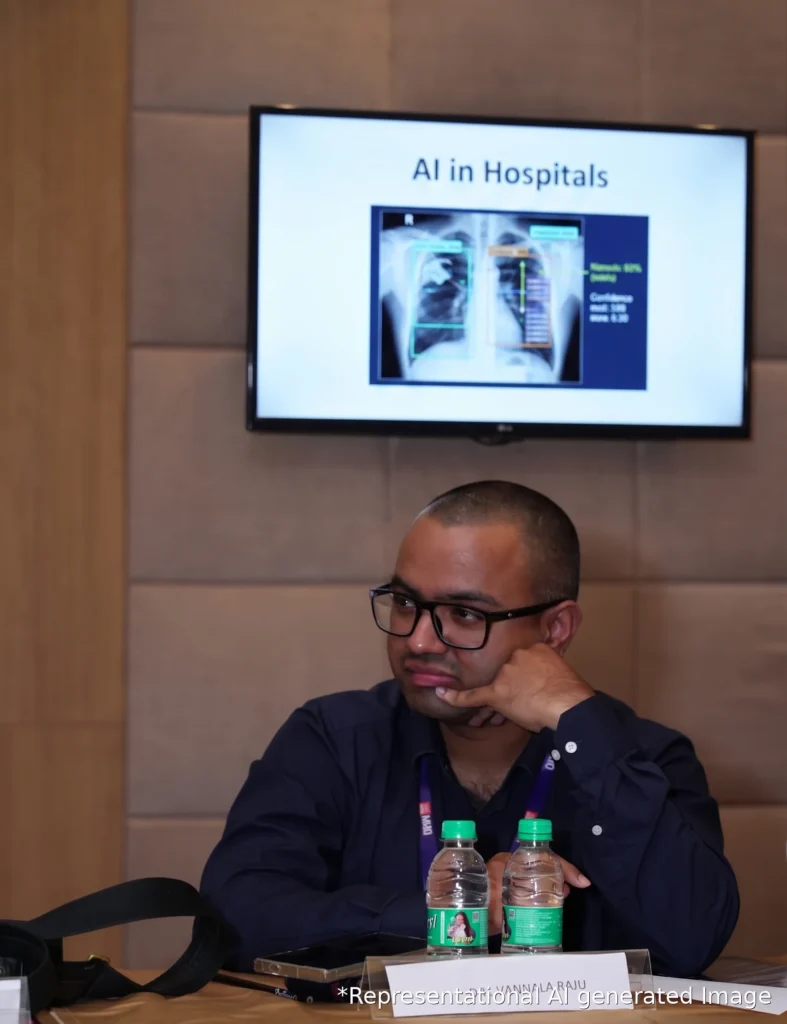
The insights from this session are highly consequential for the general public and our patients. Here is what the future of smart healthcare means for you.
What is a “Smart Hospital” and Why Should Patients Care?
When medical professionals talk about “interoperability” or “digital public infrastructure,” it can easily sound like abstract tech jargon. But at its heart, this digital transformation is entirely about your convenience, your safety, and your health.
During the roundtable, senior leaders debated how to streamline India’s fragmented electronic medical record (EMR) systems. For you, a unified system means:
- No More Lost Files: Your lifelong health history—prescriptions, lab reports, and scan details—can safely move with you if you change cities or consult a new specialist.
- Faster Emergency Responses: In critical situations, doctors can instantly see your allergies, underlying conditions, or blood group without wasting precious minutes.
- Reduced Administrative Headaches: Technologies presented by innovators like Evoco by Bosch demonstrate how unifying hospital systems can drastically reduce discharge preparation times, allowing you to go home to your family faster.
Artificial Intelligence: Assisting Your Doctor, Never Replacing Them
One of the most vital consensus points reached by the medical community and tech giants like Microsoft during the session was the role of Artificial Intelligence (AI) in clinical care.
“AI must assist, never replace, clinical decision-making. The final authority and accountability for patient outcomes must always remain with the human doctor.”
As a physician, I want to reassure you that AI is not taking over your treatment. Instead, think of AI as an incredibly smart, lightning-fast assistant working behind the scenes.
Real-World AI Applications Improving Patient Care Right Now:
- Reducing Waiting Times: Specialized voice tools, like those developed by PypeAI, are already helping hospitals automate routine phone calls, coordinate follow-ups in regional languages (including Telugu and Hindi), and cut down outpatient department (OPD) wait times.
- Deeper Diagnostic Support: Advanced AI algorithms are being trained to spot early signs of chronic diseases—such as kidney or liver issues—long before symptoms appear, allowing us to intervene early.
- More Time for Empathy: By automating documentation and paperwork, technology gives your doctors and nurses more time to do what they do best: sit with you, listen to your concerns, and provide comfort.
Your Data, Your Rights: Privacy under the DPDP Act
I know that data privacy is a significant concern for patients today. “Who sees my medical data?” is a question I hear frequently.
The roundtable dedicated substantial time to analyzing India’s Digital Personal Data Protection (DPDP) Act and national digital frameworks. The overarching principle endorsed by every stakeholder in the room is non-negotiable: The patient is the sovereign owner of their health data.
As Dr. R.S. Sharma, the former CEO of the National Health Authority, eloquently noted during our session, medical data belongs to you—not the hospital, not the insurance company, and not the technology vendor. Frameworks like the Ayushman Bharat Digital Mission (ABDM) are building secure, consent-based architectures. This means no one can look at your medical records unless you explicitly grant them permission through a secure digital artifact.
Bridging the Policy and Bedside Gap
The roundtable concluded with a powerful list of recommendations sent directly to regulatory bodies like the Central Drugs Standard Control Organisation (CDSCO) and the Government of India. We collectively advocated for establishing minimal data-sharing standards to protect patient portability, creating clear healthcare guides for data privacy, and setting up secure “sandboxes” to rigorously test AI safety before it ever reaches a patient’s bedside.
At Virinchi Hospitals, we are committed to keeping pace with these advancements. We look at digital health tools not as a way to distance ourselves from our patients, but as a bridge to provide more precise, transparent, and accessible care.
The digital future of Indian healthcare is incredibly bright, and it is being built with your safety, your privacy, and your well-being as the foundational blueprint.
What are your thoughts or concerns regarding AI and digital health records in hospitals? Let’s discuss in the comments below.